
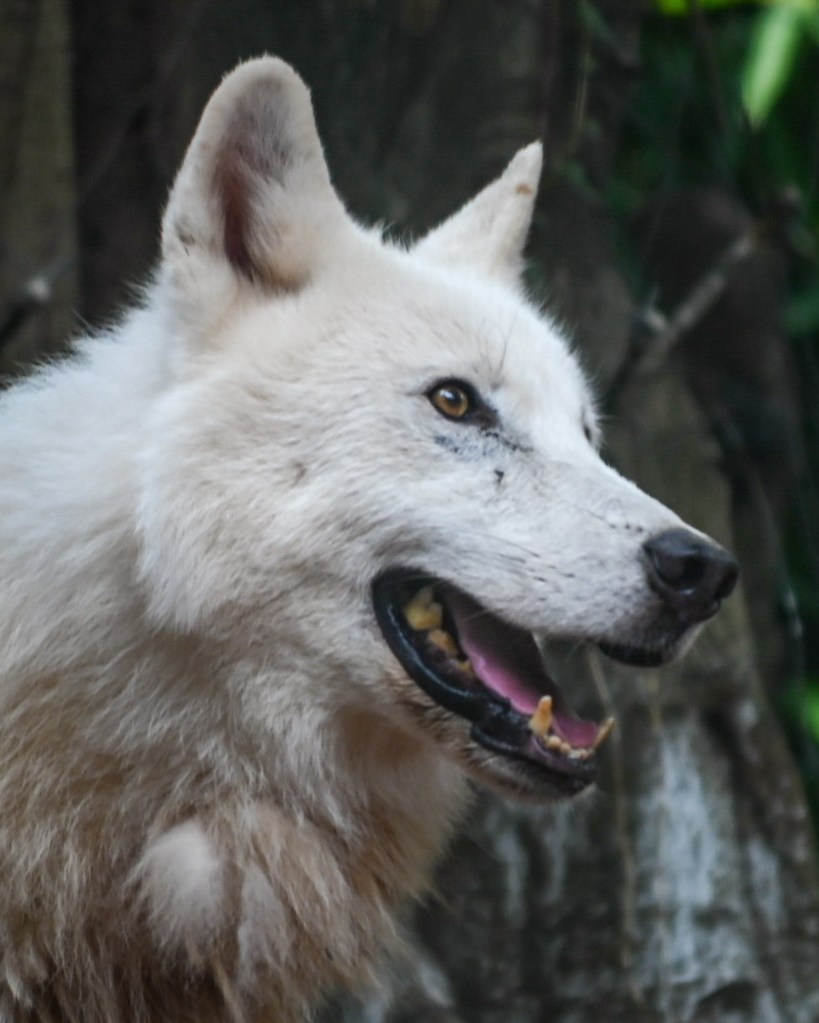
Basic Facts | 基础信息
- Scientific Name: Canis lupus arctos
- Diet: Carnivore
- Lifespan: 7–10 years (Wild) / Up to 18 years (Captivity)
- Estimated Population: Stable (Protected by remote habitat)
- Range: Canadian Arctic, Alaska, and Greenland
中文翻译 | Read in Chinese
- 学名:Canis lupus arctos
- 饮食:肉食性
- 寿命:野外7–10年 / 圈养最高可达18年
- 预估数量:稳定(受偏远极地保护)
- 分布范围:加拿大北极地区、阿拉斯加及格陵兰岛
Habitat & Diet | 栖息地与饮食
In the wild, Arctic wolves survive in some of the most unforgiving terrain on Earth. They endure months of absolute darkness and sub-zero temperatures. To survive, they hunt in packs across vast territories, preying primarily on muskoxen and Arctic hares. Their stark white coats provide perfect camouflage against the snow and ice, allowing them to approach prey undetected in the barren landscape.
中文翻译 | Read in Chinese
在野外,北极狼生存在地球上最严酷的环境中。它们要忍受长达数月的极夜和零下极寒。为了生存,它们在广袤的领地上成群狩猎,主要捕食麝牛和北极兔。它们纯白的皮毛在冰雪中提供了完美的伪装,使其能够在荒凉的地貌中悄无声息地接近猎物。
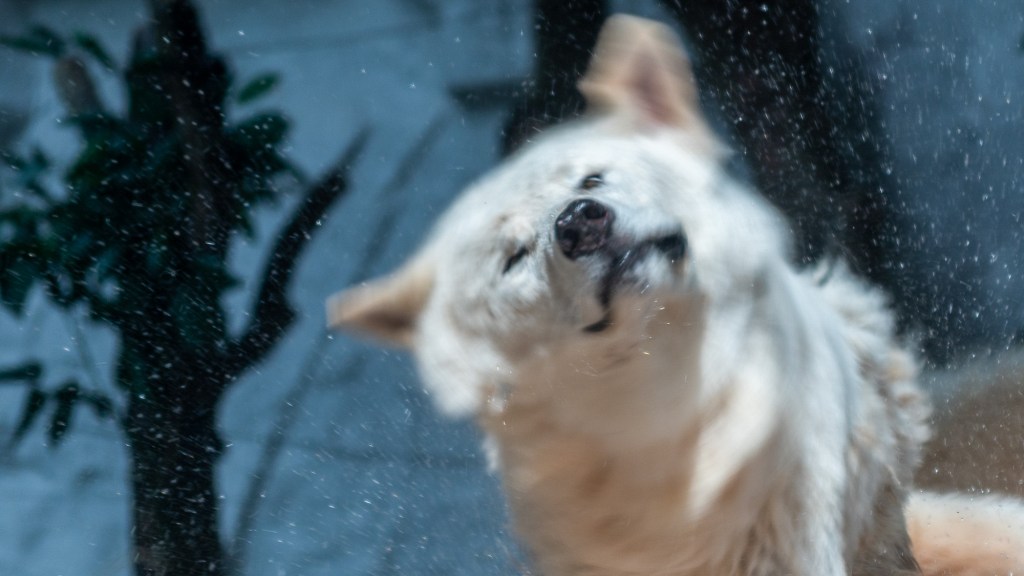
These wolves can go weeks without food and are capable of eating up to 10 kg (22 lbs) in one meal when prey is abundant.
See the Wild
中文翻译 | Read in Chinese
这些狼可以连续数周不进食,而在猎物充足时,它们一顿可吃下多达 10 公斤(22 磅)的食物。
Field Notes | 观察笔记
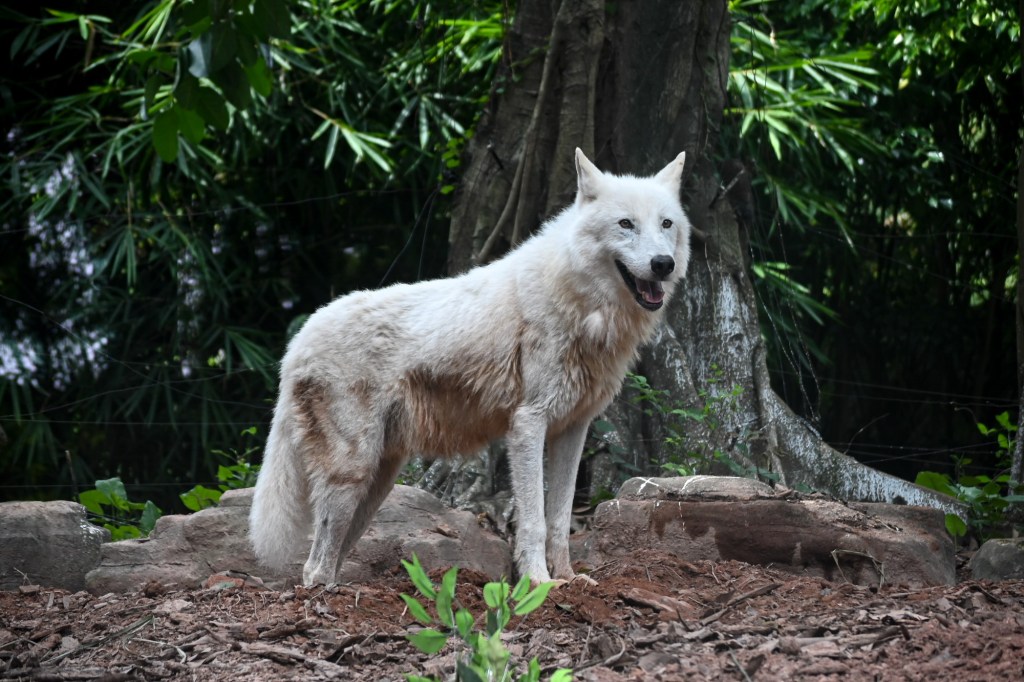
Transparency in wildlife photography is vital. These portraits were captured at Changlong Safari Park. While their natural environment is the freezing tundra of the high Arctic, photographing them here allows for an intimate study of their unique cold-weather adaptations, such as their smaller, rounded ears (to prevent frostbite) and dense, insulating coats.
中文翻译 | Read in Chinese
在野生动物摄影中,保持真实和透明度至关重要。这些肖像拍摄于长隆野生动物世界。虽然它们的自然栖息地是极寒的北极苔原,但在这里拍摄让我们得以近距离观察它们独特的御寒特征,例如较小且圆润的耳朵(为了防止冻伤),以及浓密保暖的皮毛。
Conservation Status | 保护现状
Unlike other wolf subspecies, the Arctic wolf has largely avoided persecution and habitat destruction from human settlement because of the extreme remoteness of their home. However, climate change is their most urgent looming threat. Rapidly warming temperatures are altering the delicate tundra ecosystems, causing a decline in the populations of their traditional prey and forcing the wolves to travel dangerously long distances to survive.
中文翻译 | Read in Chinese
与其他狼的亚种不同,由于栖息地极其偏远,北极狼在很大程度上免受了人类定居带来的捕杀和栖息地破坏。然而,气候变化是它们面临的最紧迫的潜在威胁。迅速变暖的气温正在改变脆弱的苔原生态系统,导致其传统猎物种群数量下降,迫使北极狼为了生存不得不跋涉异常遥远的危险距离。
How You Can Help | 如何提供帮助
While the Arctic wolf population is currently stable, their future is inseparable from the health of the polar regions. Protecting this species requires defending their remaining wilderness from industrial expansion and oil development. US citizens can take immediate action to help shield America’s Arctic habitats from these threats.
中文翻译 | Read in Chinese
虽然目前北极狼的数量相对稳定,但它们的未来与极地地区的健康息息相关。保护这一物种需要抵御工业扩张和石油开发,守护它们仅存的荒野。美国公民可以立即采取行动,帮助保护美洲北极栖息地免受这些威胁。
 Nick Clement | Wildlife Journal