Basic Facts | 基础信息
- Scientific Name: Rhinopithecus roxellana
- Diet: Herbivore (primarily lichens, leaves, bark, and seeds)
- Lifespan: 15–20 years in the wild
- Estimated Population: 8,000–15,000 (Endangered)
- Range: Mountainous forests of Central and Southwestern China
中文翻译 | Read in Chinese
- 学名:Rhinopithecus roxellana
- 饮食:草食性(主要以地衣、树叶、树皮和种子为食)
- 寿命:野外15–20年
- 预估数量:8,000–15,000 只(濒危)
- 分布范围:中国中西部和西南部的山地森林
Habitat & Diet | 栖息地与饮食
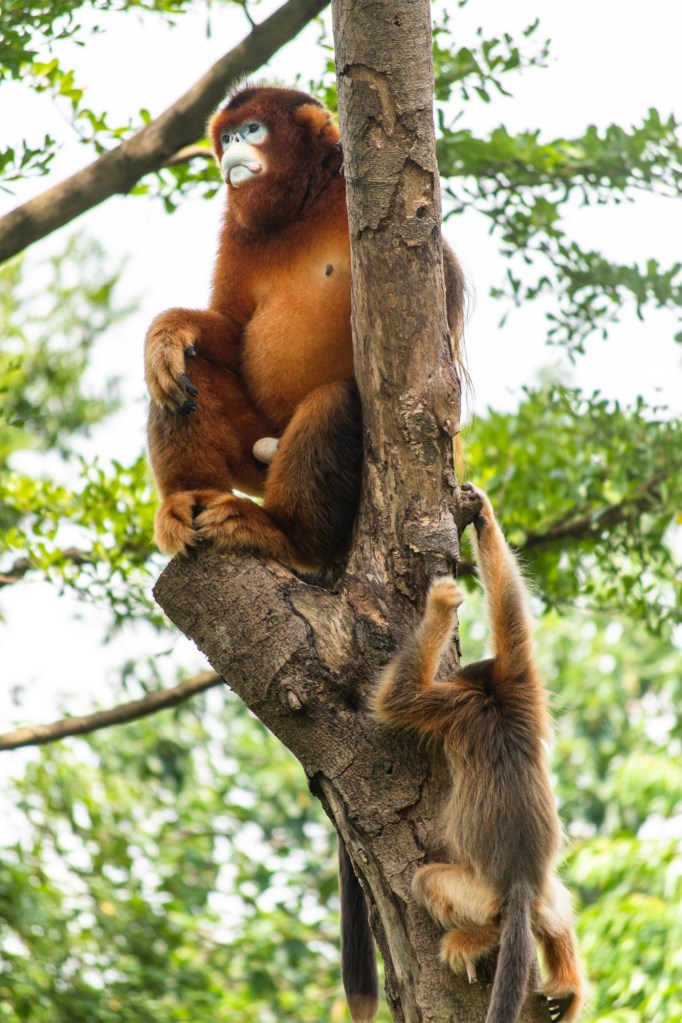
Golden snub-nosed monkeys are highly arboreal, spending the vast majority of their lives in the canopy of broadleaf and coniferous forests at elevations up to 3,400 meters. Their diet is highly specialized and shifts with the extreme seasons. In the summer, they forage for young leaves, fruits, and seeds. During the harsh, snowy winters when food is scarce, they survive almost entirely on lichens and tree bark stripped from the branches. They live in massive, complex social groups that can sometimes number in the hundreds, providing warmth and protection.
中文翻译 | Read in Chinese
川金丝猴属于高度树栖动物,它们一生中绝大部分时间都在海拔高达 3,400 米的阔叶林和针叶林冠层中度过。它们的饮食高度特化,并随着极端的季节变化而改变。在夏季,它们觅食嫩叶、水果和种子。在食物匮乏的严酷下雪的冬季,它们几乎完全依靠树枝上的地衣和树皮生存。它们生活在庞大而复杂的社会群体中,有时数量可达数百只,以此来提供温暖和保护。
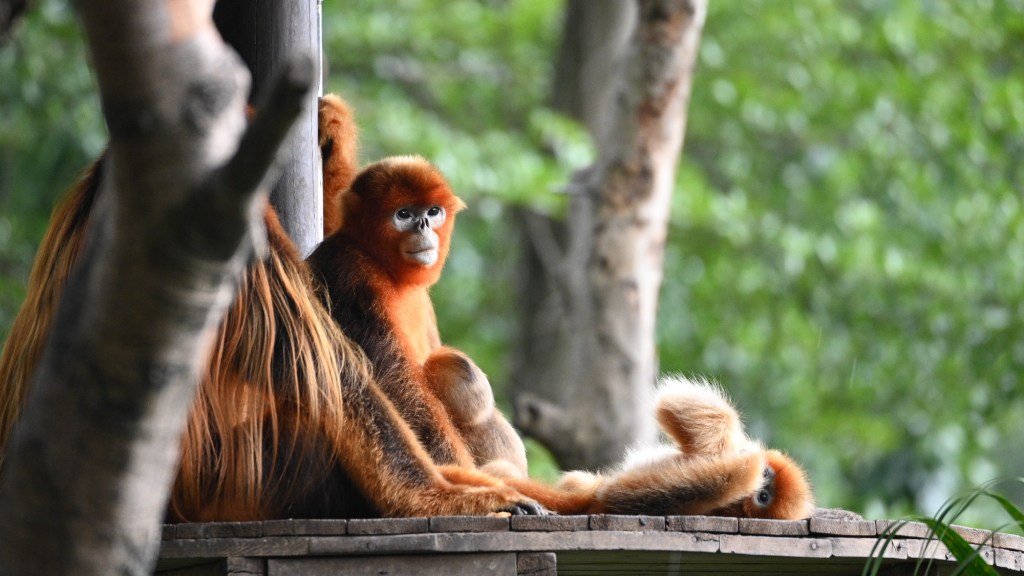
They have an incredibly tight-knit social structure. Females in the group frequently practice “allomothering,” meaning they will happily nurse, cuddle, and protect infants that belong to other mothers in the troop.
中文翻译 | Read in Chinese
它们拥有极其紧密的社会结构。猴群中的雌性经常实行“共同育儿”,这意味着它们会非常乐意地哺乳、拥抱和保护属于群内其他母亲的幼崽。
Field Notes | 观察笔记
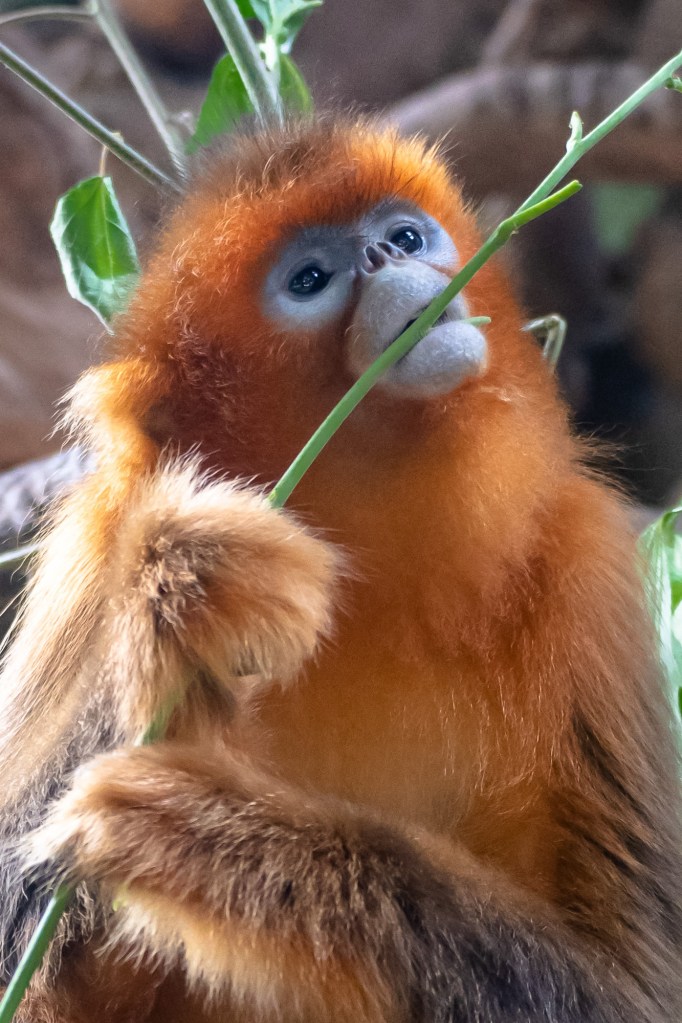
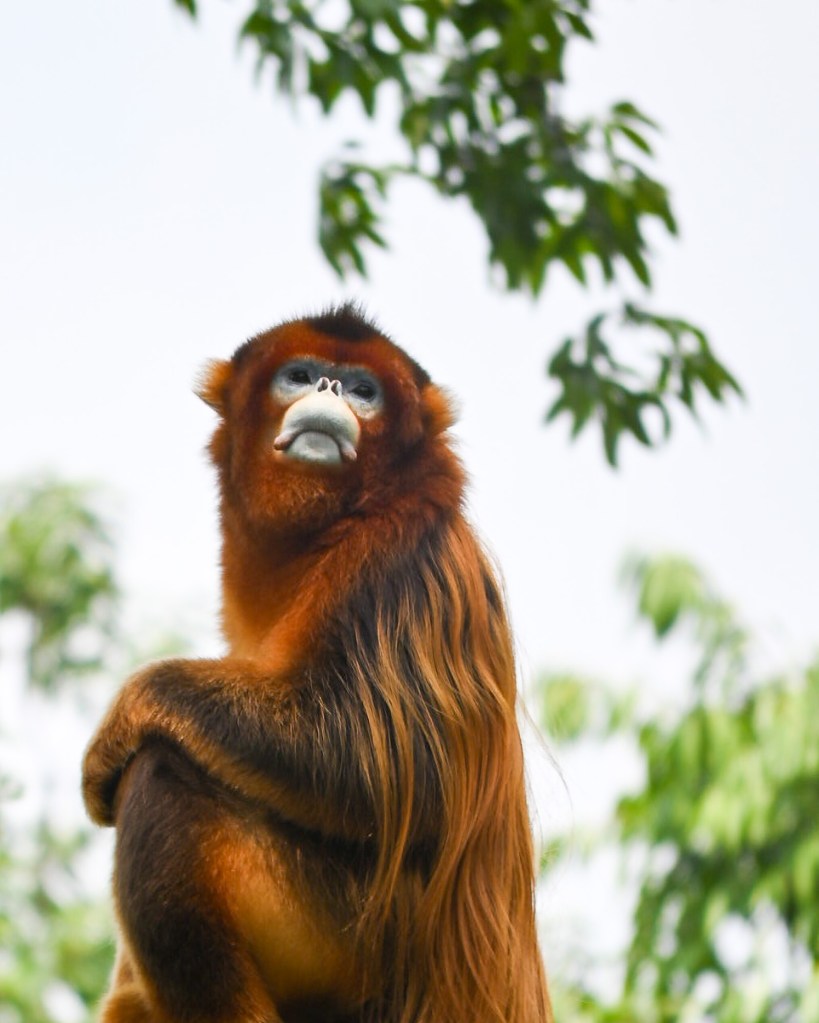
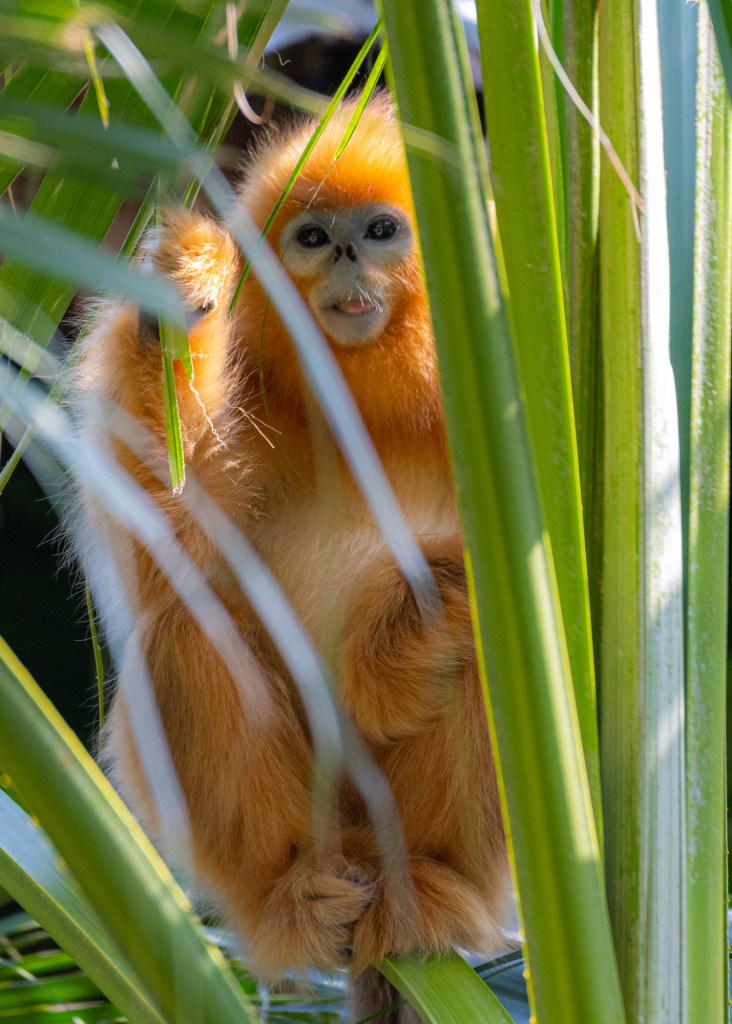
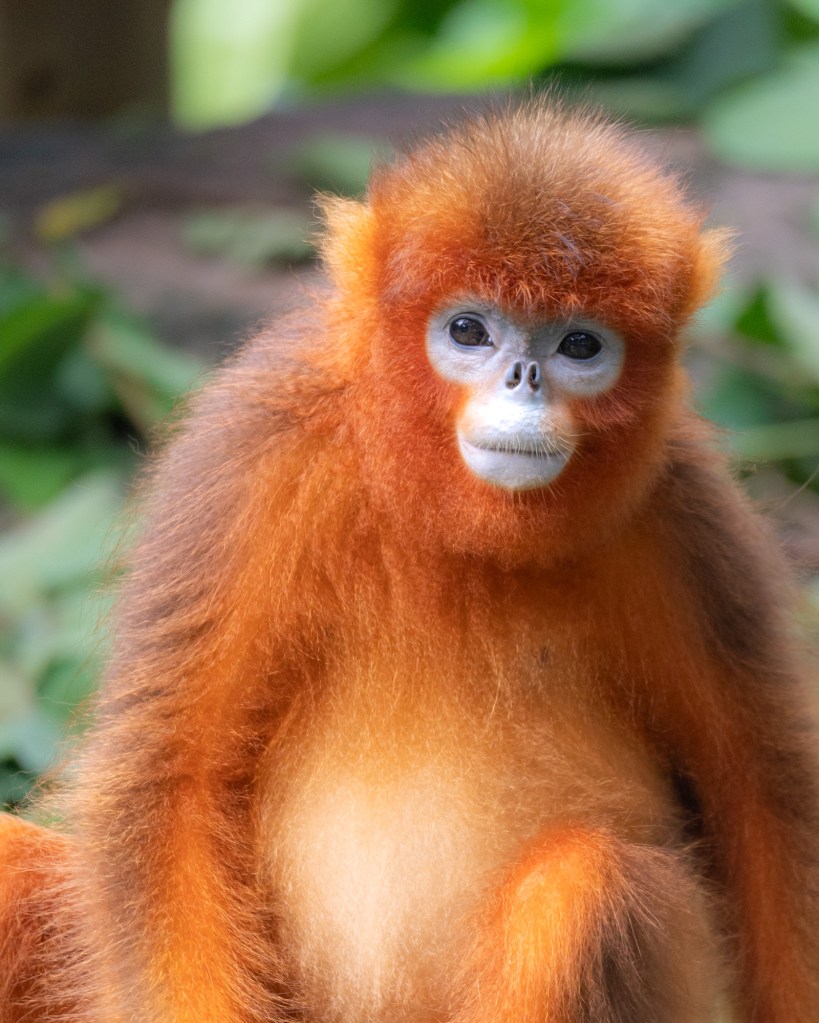
These portraits were captured at Changlong Safari Park. Because these primates natively inhabit the freezing, high-altitude forests of China (often enduring heavy snow), photographing them offers a chance to study their unique evolutionary adaptations up close. Their most famous feature—the flat, upward-facing nose—is actually a survival mechanism to prevent frostbite in sub-zero mountain temperatures, while their incredibly dense, vibrant golden coats provide vital insulation.
中文翻译 | Read in Chinese
这些肖像拍摄于长隆野生动物世界。由于这些灵长类动物原产于中国严寒的高海拔森林(经常要忍受大雪),拍摄它们提供了一个近距离研究其独特进化特征的机会。它们最著名的特征——扁平且朝上的鼻子——实际上是一种为了防止在零下高山气温中冻伤的生存机制,而它们极其浓密、鲜艳的金黄色皮毛则提供了至关重要的保暖作用。
Conservation Status | 保护现状
The Golden Snub-nosed Monkey is officially classified as Endangered. While their remote, high-altitude habitat once protected them, rapid deforestation for logging and agricultural expansion has severely fragmented their living space. This habitat loss not only isolates family groups—reducing genetic diversity—but also destroys the slow-growing lichens they rely on to survive the brutal winters. Ecotourism and expanding protected national reserves in China are currently their strongest lifelines.
中文翻译 | Read in Chinese
川金丝猴被正式列为濒危物种。虽然它们偏远的高海拔栖息地曾经保护了它们,但由于伐木和农业扩张导致的迅速森林砍伐,严重地将其生存空间碎片化。这种栖息地的丧失不仅孤立了家族群体——降低了遗传多样性——还破坏了它们赖以度过严冬的生长缓慢的地衣。生态旅游和中国不断扩大的国家级自然保护区是目前它们最强大的生命线。
How You Can Help | 如何提供帮助
Protecting these incredible primates requires supporting organizations dedicated to restoring fragmented forests and funding anti-poaching patrols within China’s critical mountain reserves.
中文翻译 | Read in Chinese
保护这些令人惊叹的灵长类动物,需要支持那些致力于恢复破碎森林、并为中国重要山区保护区内的反盗猎巡逻提供资金的组织。
 Nick Clement | Wildlife Journal