Basic Facts | 基础信息
- Scientific Name: Nasalis larvatus
- Diet: Folivore (Primarily leaves, seeds, and unripe fruits)
- Lifespan: 15–20 years in the wild
- Estimated Population: Less than 7,000 (Endangered)
- Range: Endemic exclusively to the island of Borneo
中文翻译 | Read in Chinese
- 学名:Nasalis larvatus
- 饮食:食叶动物(主要以树叶、种子和未成熟的水果为食)
- 寿命:野外15–20年
- 预估数量:不足 7,000 只(濒危)
- 分布范围:仅特产于婆罗洲岛
Habitat & Diet | 栖息地与饮食
Proboscis monkeys are strictly arboreal and are almost never found far from water. They sleep in trees directly overhanging rivers to protect themselves from land predators like clouded leopards. Their diet is intensely specialized: they possess a complex, multi-chambered stomach—much like a cow—filled with unique bacteria to break down tough leaves and neutralize toxins found in certain plants. Because of this specialized digestive system, eating easily fermentable, sweet, ripe fruits can actually be fatal to them.
中文翻译 | Read in Chinese
长鼻猴严格在树上生活,几乎从不远离水源。它们睡在悬在河流上方的树上,以保护自己免受云豹等陆地捕食者的袭击。它们的饮食极其特化:它们拥有一个复杂的、多室的胃——非常像牛——里面充满了独特的细菌,可以分解坚硬的树叶并中和某些植物中的毒素。由于这种特殊的消化系统,食用容易发酵的、甜腻的成熟水果实际上对它们来说是致命的。
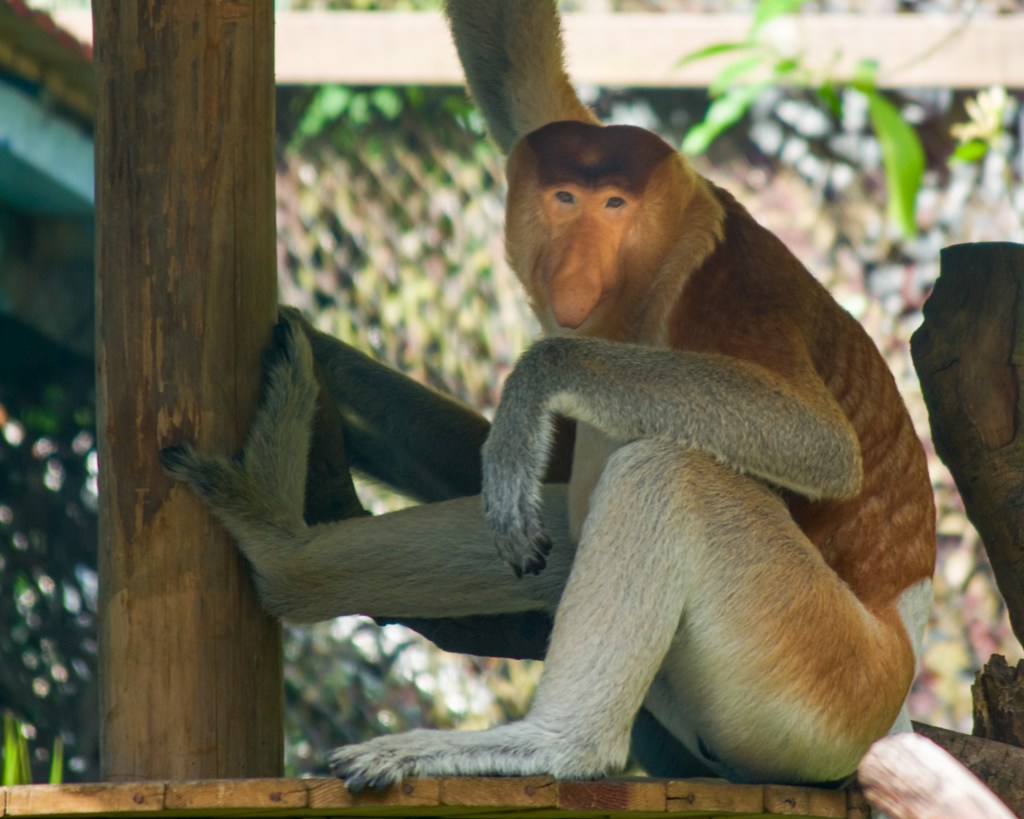
Unlike most apes and monkeys, proboscis monkeys love the water. They actually have partially webbed toes and fingers, allowing them to outswim predators like crocodiles. They are known to leap from high branches straight into rivers with a massive belly flop.
中文翻译 | Read in Chinese
与大多数猿猴不同,长鼻猴非常喜欢水。它们的脚趾和手指之间实际上有部分蹼,这让它们能游得比鳄鱼等捕食者还快。众所周知,它们会从高高的树枝上直接跳进河里,以肚子入水激起巨大的水花。
Field Notes | 观察笔记
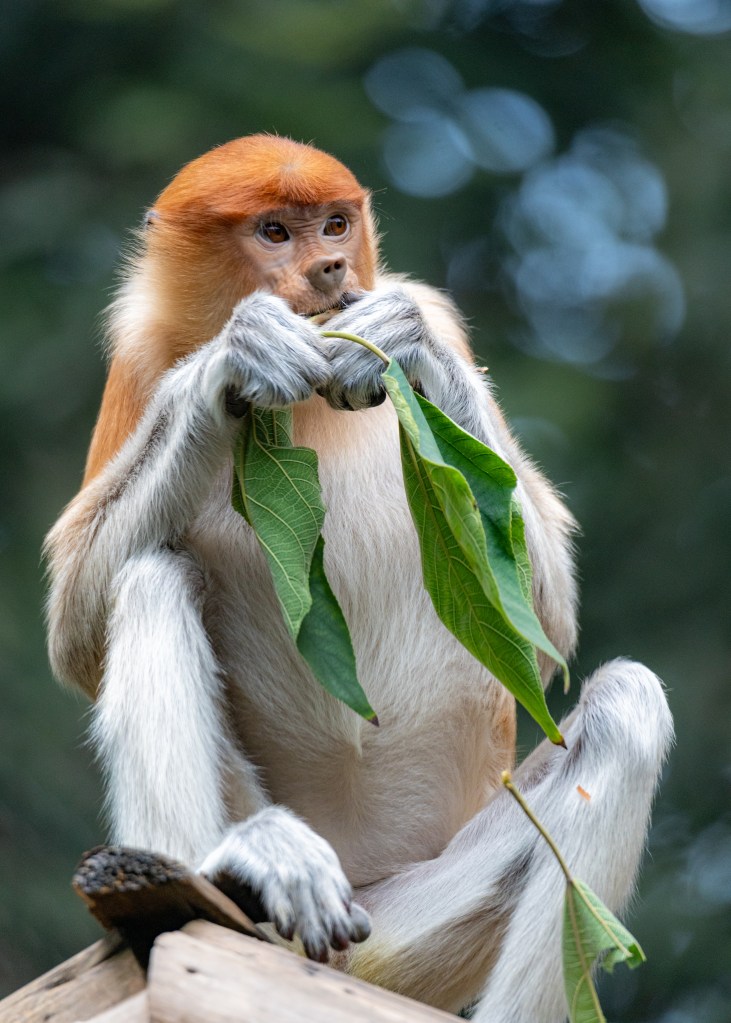
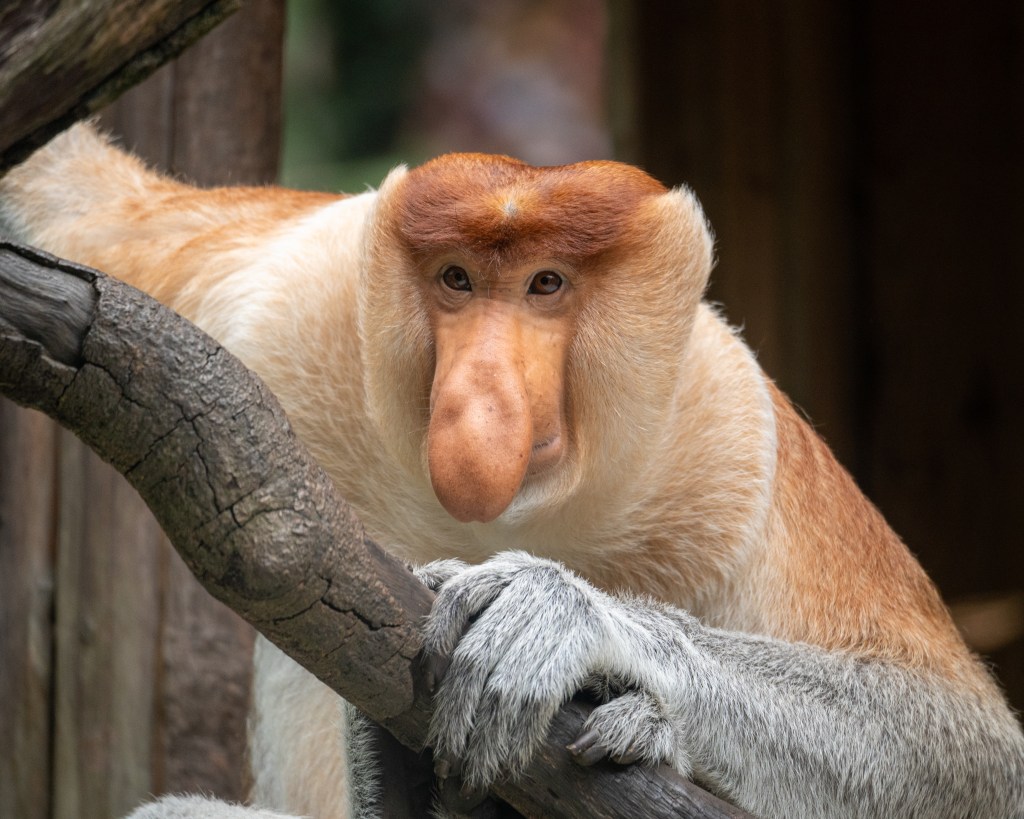
Captured at Changlong Safari Park, these portraits offer a close-up look at one of the primate world’s most extreme examples of sexual dimorphism. The adult male features a massive, pendulous nose, while the female possesses a much smaller, sharply upturned nose. Natively, these monkeys inhabit the dense, humid mangrove swamps and riverine forests of Borneo, making them highly specialized—and highly vulnerable—creatures.
中文翻译 | Read in Chinese
这些肖像拍摄于长隆野生动物世界,让我们得以近距离观察灵长类动物世界中两性异形最极端的例子之一。成年雄性长着巨大的、下垂的鼻子,而雌性的鼻子则小得多,且尖端向上翘起。在原产地,这些猴子栖息在婆罗洲茂密潮湿的红树林沼泽和河流沿岸森林中,这使它们成为高度特化——也极度脆弱——的生物。
Conservation Status | 保护现状
The Proboscis Monkey is listed as Endangered, with populations plummeting by more than 50% over the last 40 years. Because they are endemic to Borneo and require highly specific coastal and riverine habitats, they are incredibly sensitive to habitat loss. The rapid clearing of mangrove swamps and rainforests for timber, settlement, and large-scale palm oil plantations has severely fragmented their territory, isolating populations and drastically reducing their food supply.
中文翻译 | Read in Chinese
长鼻猴被列为濒危物种,在过去40年里,其数量骤降了50%以上。因为它们是婆罗洲的特有物种,需要非常特定的沿海和河流栖息地,所以它们对栖息地的丧失极其敏感。为了木材、人类定居和大规模棕榈油种植园而迅速砍伐红树林沼泽和雨林,严重地将其领地碎片化,导致种群孤立并大幅减少了它们的食物来源。
How You Can Help | 如何提供帮助
Protecting the Proboscis monkey means protecting Borneo’s forests. Supporting organizations that fight deforestation and choosing products made with certified sustainable palm oil (RSPO) are the most direct ways to help preserve their home.
中文翻译 | Read in Chinese
保护长鼻猴就意味着保护婆罗洲的森林。支持致力于对抗森林砍伐的组织,以及选择使用经过认证的可持续棕榈油 (RSPO) 制造的产品,是帮助保护它们家园最直接的方法。
 Nick Clement | Wildlife Journal